

Geology & Route Characteristics
Crossing Lauribina La (also widely recorded on survey maps as Laurebina Pass or Gosaikunda Pass) represents the definitive crux connecting Rasuwa district to Helambu in Bagmati Province. Unlike the broad glacial moraines of the Everest Khumbu or the expansive wind-scoured flats of the Annapurna Circuit, Lauribina La is an exposed knife-edge col carved through high metamorphic gneiss and granite slabs.
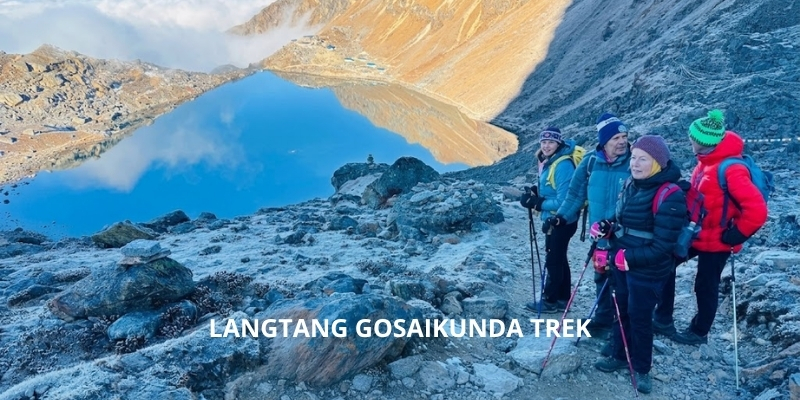
Approaching west-to-east, the route begins its serious high alpine escalation past Cholangpati and Shin Gompa, ascending rapidly into the sacred tarn plateau holding Saraswati Kunda, Bhairab Kunda, and the massive holy expanse of Gosaikunda (4,380m). Beyond the lake teahouses, the trail climbs relentlessly through loose scree, frost-heaved slate, and boulder ramps before topping out at 4,610m near Surya Kunda.
“Lauribina isn’t technically difficult in dry autumn, but the altitude jump catches independent hikers unprepared. You climb from dense rhododendron forests directly into thin alpine air over just 36 hours. Respect the pace, leave Gosaikunda by 05:00 AM, and let your breathing dictate your rhythm — never the watch.”
— Chandra B Gurung, Lead Expedition Guide
Acclimatization Strategy & Golden Rules
The biggest tactical error on the Gosaikunda trek is accelerating ascent times because trail distances appear deceptively short on two-dimensional topographical maps. While the linear distance from Shin Gompa to the pass is under 11 kilometers, the vertical rise is a demanding 1,280 meters.
The Shin Gompa Pause: Never leap directly from Dhunche (1,960m) to Gosaikunda (4,380m) in 2 days. Sleep at Shin Gompa (3,330m) or Laurebina (3,910m) to allow resting blood oxygen saturation levels to stabilize safely above 85%.
4.5L Daily Hydration Protocol: Cold, dry alpine winds drain hydration through respiratory water vapor loss at accelerated rates. Drink boiled ginger-lemon water and electrolytes continuously; avoid alcohol and heavy caffeine past Sing Gompa.
Climb High, Sleep Low: Upon arrival at Gosaikunda lodge, drop your main daypack and hike 150m up the northern ridge before dusk. Returning to lodge elevation triggers overnight erythropoietin production without subjecting sleep to extreme hypoxic distress.